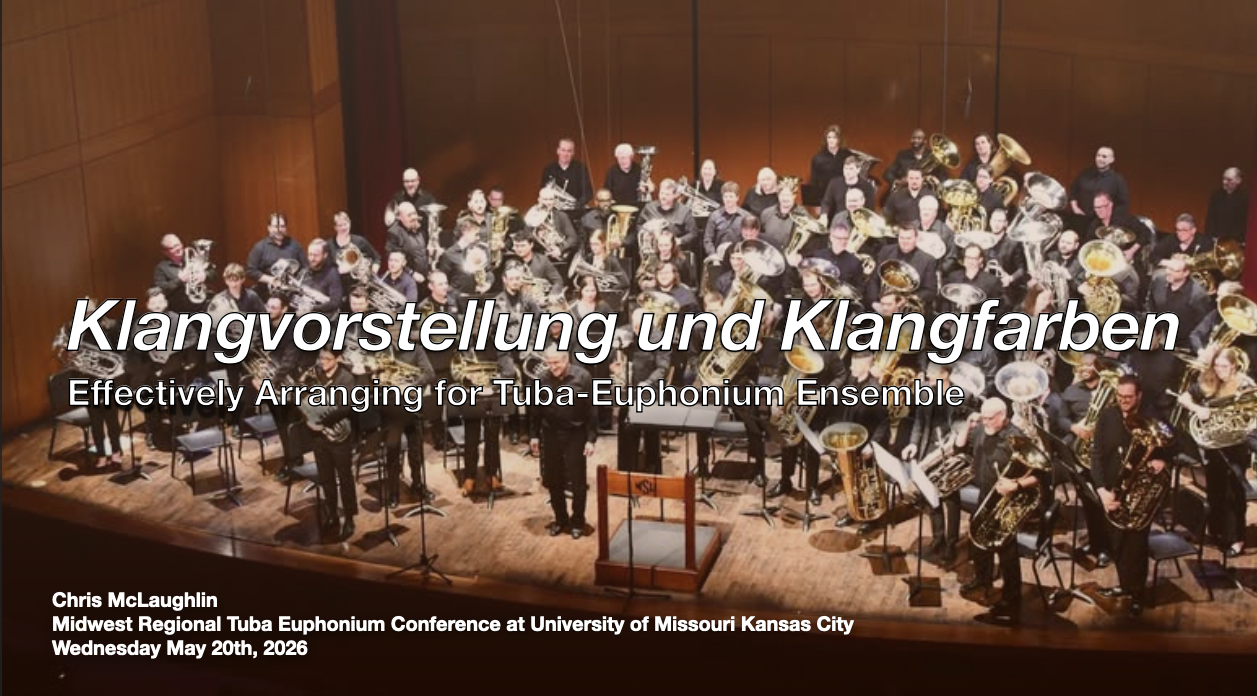
Klangvorstellung und Klangfarben: Effectively Arranging for Tuba-Euphonium Ensemble
The tuba-euphonium ensemble has exponentially grown as a pedagogical ensemble in collegiate studio environments. Since both the instruments and the ensemble itself are relatively nascent, many composers do not know how to write for this ensemble. Synthesizing the German musical concepts of Klangvorstellung (sound concept) and Klangfarben (sound color) alongside orchestration research such as that of Kennan and Grantham and Beauregard, this research creates a guide for how to arrange for tuba-euphonium ensembles of various sizes and configurations.
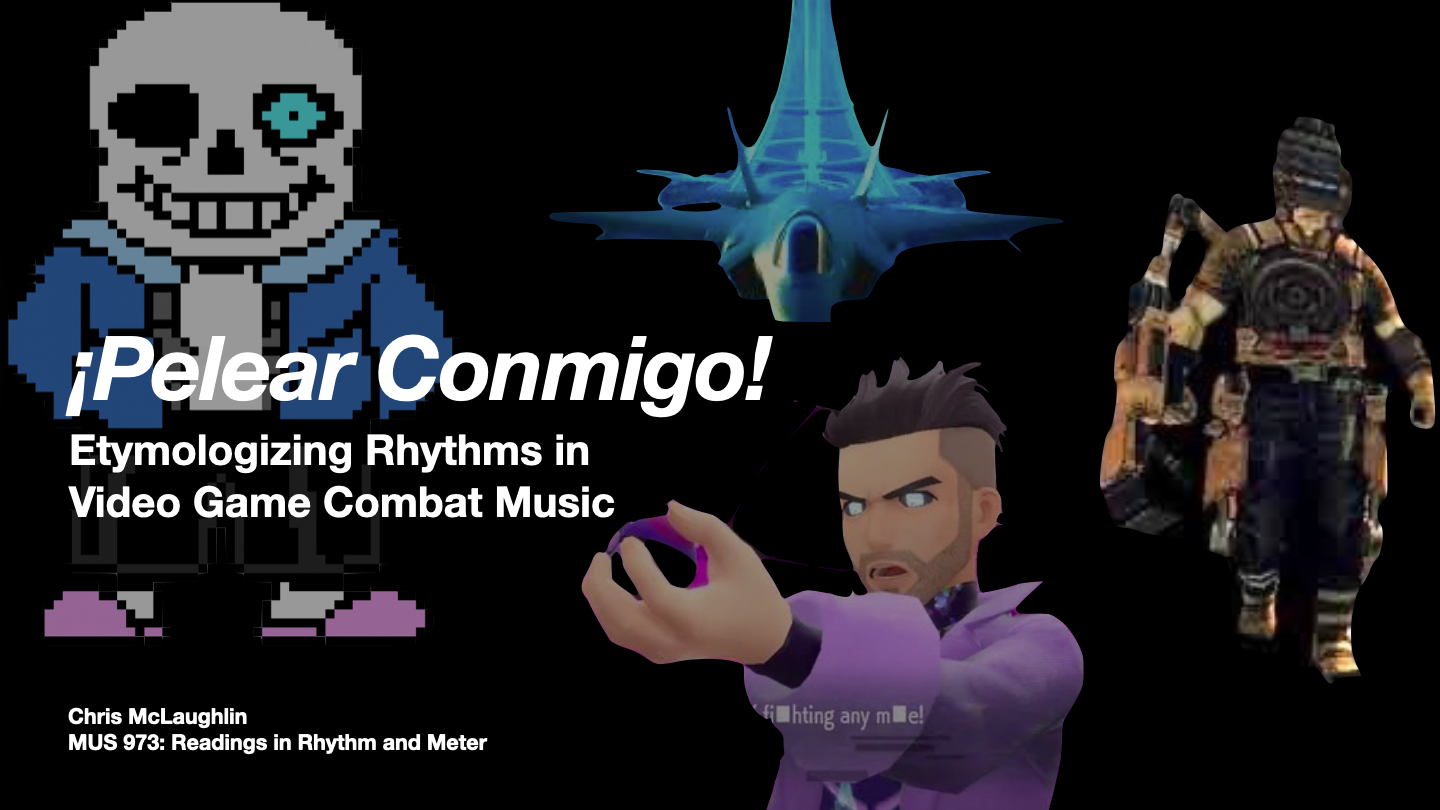
¡Pelear Conmigo!: Etymologizing Rhythms in Video Game Combat Music
Son clave timeline rhythms are ubiquitous in video game music. The use of the tresillo and double tresillo rhythms in video game combat music are extensively documented. However, the milonga rhythm is also used in video game combat music. The milonga rhythm in particular has an historic relationship with political dissent and social combativeness. As a result, cultured listeners can subconsciously associate these rhythms with Hispanic machismo culture, aurally depicting the musical passage as combative. This project ultimately proposes a new hermeneutic lens through which to contextualize the use of these rhythms.

Schmalfeldt Plus 1: The Performer Strikes Back
Schmalfeldt’s seminal 1985 research, which pioneered the Performance and Analysis sub-discipline, depicts a thoughtful dialogue between the roles of the performer and the role of the analyst. However, her research primarily accounts for a solo pianist as performer. This further research synthesizes other research from other performance and analysis researchers such as Imbrie, LeGuin, and Leong. Ultimately, this research explores the roles of the wind-instrumentalist performer and exploring the relationship of performer-performer agency (as in chamber music).

Exploring “Different Kinds of Minds”: Visualization-Based Pedagogy in the Music Theory Classroom
Grandin’s research revisits the learning styles discussion as theorized by Pashler et al. This research builds on Grandin’s research and posits a correlation between her concept of “visual learners” and classically-trained musicians. This research explores pedagogical tools and tricks for incorporating visualization-based learning into the music theory classroom.
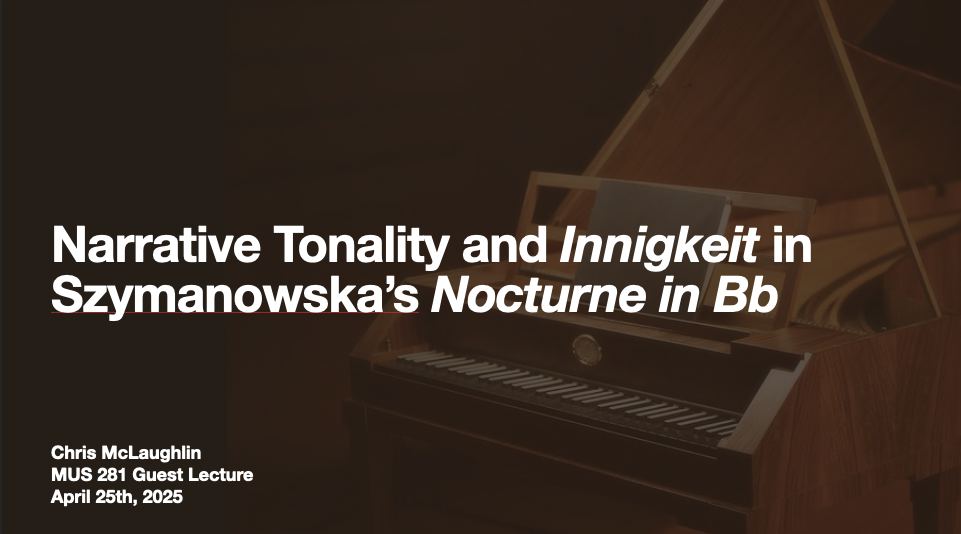
Narrative Tonality and Innigkeit in Szymanowska’s “Nocturne in Bb”
This research analyzes the music of Maria Szymanowska, Frederic Chopin’s oft-uncredited Polish predecessor, and her use of chromatic harmony as a narrative device and to foreshadow the popular use of the Germanic notion of Innigkeit in (late) Romantic music.
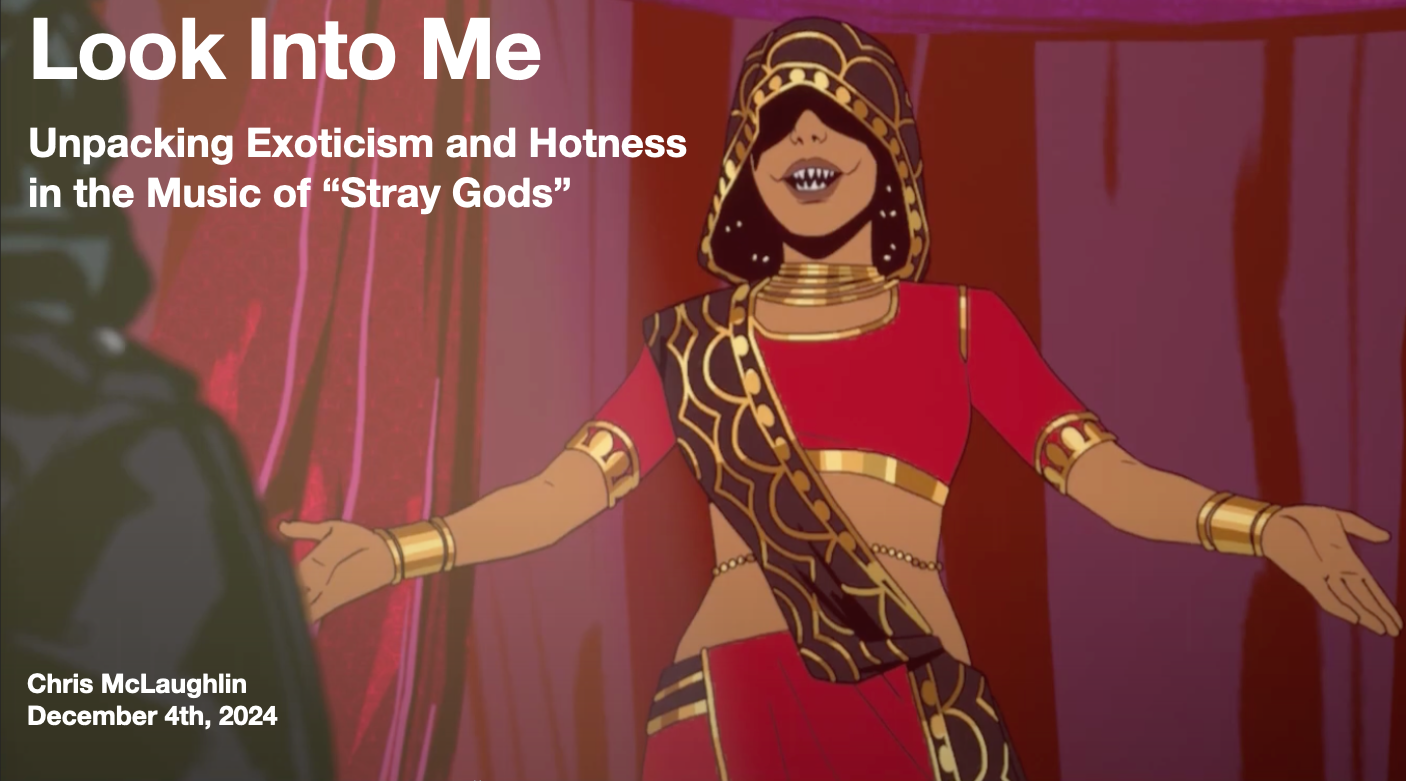
Look Into Me: Unpacking Exoticism and Hotness in the Music of “Stray Gods”
This research analyzes the music of the video game "Stray Gods” through semiotic lenses of Orientalism and the use of ♭2̂ as a sonic signal of hotness in post-millennial pop music. Together, these semiotic lenses reveal a musically stereotypical depiction of Medusa, the serpent-headed Gorgon in Greek mythology.
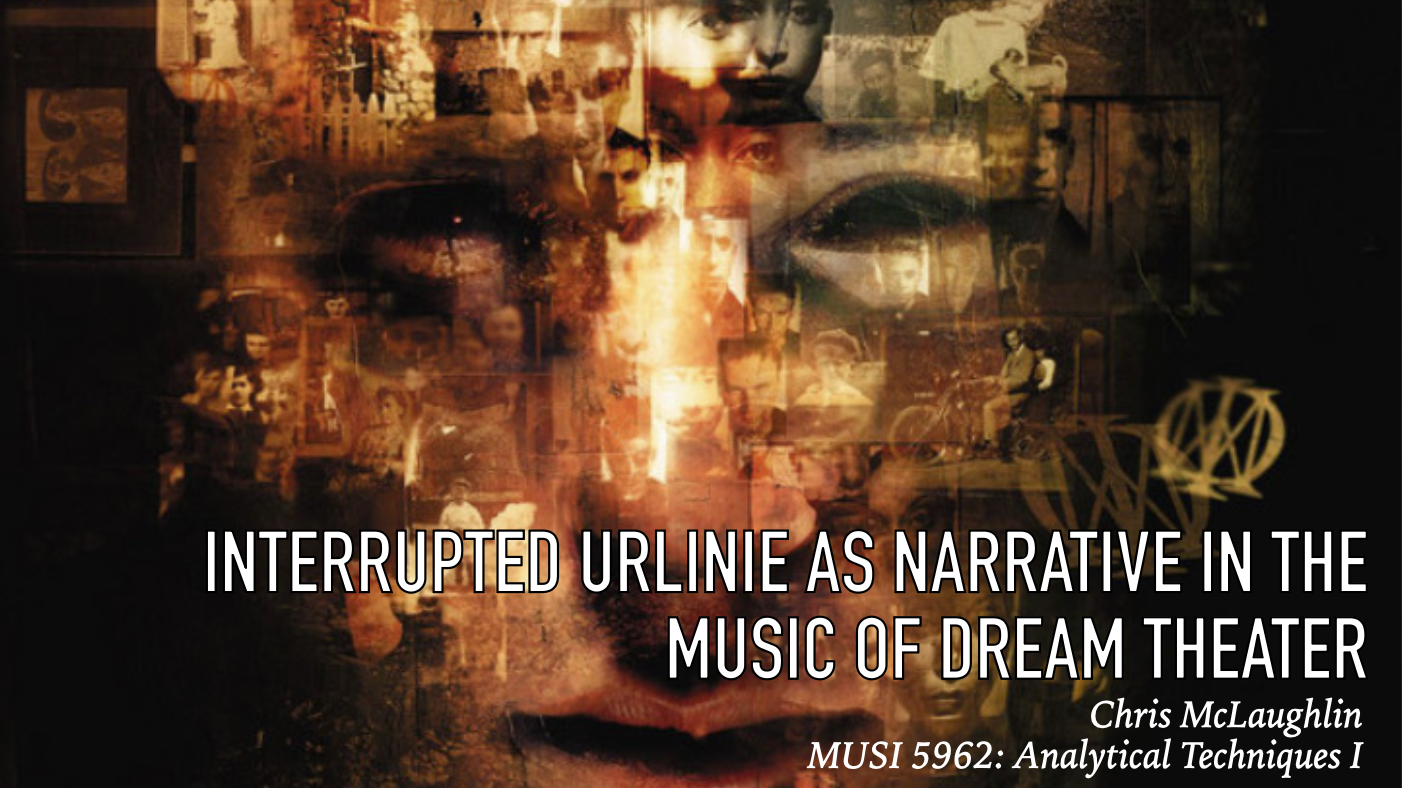
Interrupted Urlinie as Narrative in the Music of Dream Theater
This research is a Schenkerian analysis of Dream Theater’s “Scene Eight: The Spirit Carries On” from their concept album “Metropolis Part 2: Scenes from a Memory" (hereafter SFAM). A voice leading reduction reveals that the song is in D major — the primary tonic key of the album — but twice fails to descend down to 1̂, subverting the tonic arrival by a leap up to 5̂. This melodic subversion is a text-expressive device with significant implications of narrative in the plot of SFAM.